Why This Framework Exists
Some people may never say, “I don’t love myself.“
They show you in a hundred quieter ways.
They apologize before they speak.
They explain why their needs are reasonable before they dare to name them.
They tell you about something painful - then soften it, minimize it, laugh it away.
They are exhausted and call themselves lazy. Lonely and call themselves needy. Hurt and call themselves dramatic. Overburdened and ask how to become less affected by it.
They extend grace to everyone else - and judgment to themselves.
They stay too long. Give too much. Rest too little. Accept crumbs of care and call it love.
And often, the world praises them for it. For being selfless. For being easy. For being understanding. For never asking for too much.
But underneath all that goodness may be a person who learned, somewhere along the way:
Love is safer when I require nothing.
Belonging depends on being useful.
My needs create problems.
I must earn rest, care, and gentleness.
That is not a shallow confidence issue.
That is not solved by one more affirmation.
That is the lived terrain of self-abandonment, shame, and fractured self-worth - and it deserves a more honest framework.
The Story Behind the Framework
This Wheel was created for the kind of pain that is easy to miss - because it often looks like goodness.
The person who overgives.
The person who says yes while something inside whispers no.
The person who performs competence while quietly collapsing.
The person who equates rest with laziness, anger with failure, and self-protection with selfishness.
These patterns are often praised before they are questioned. And because they can look so socially acceptable from the outside, people may spend years living in profound self-abandonment without ever naming it that way.
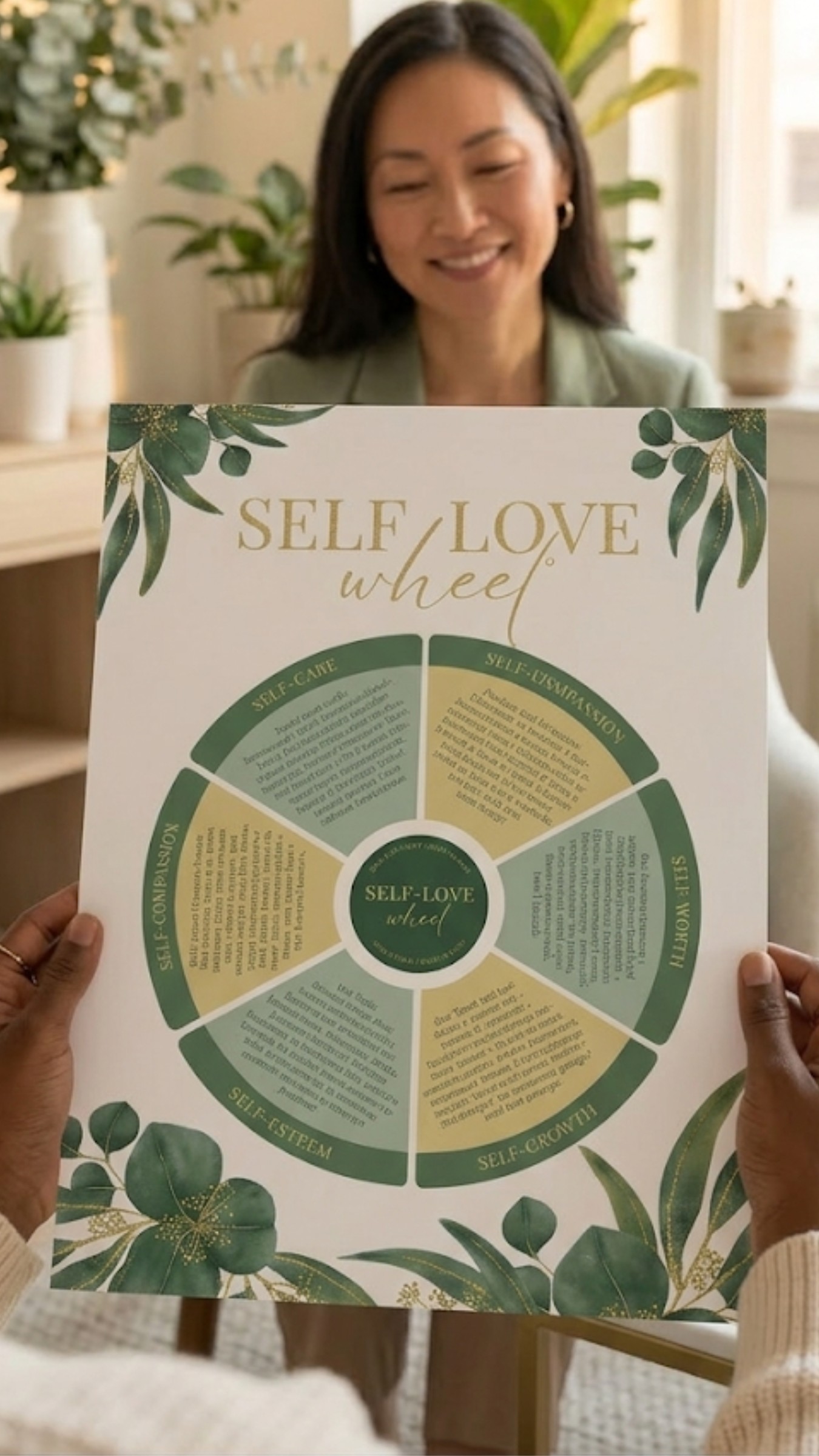
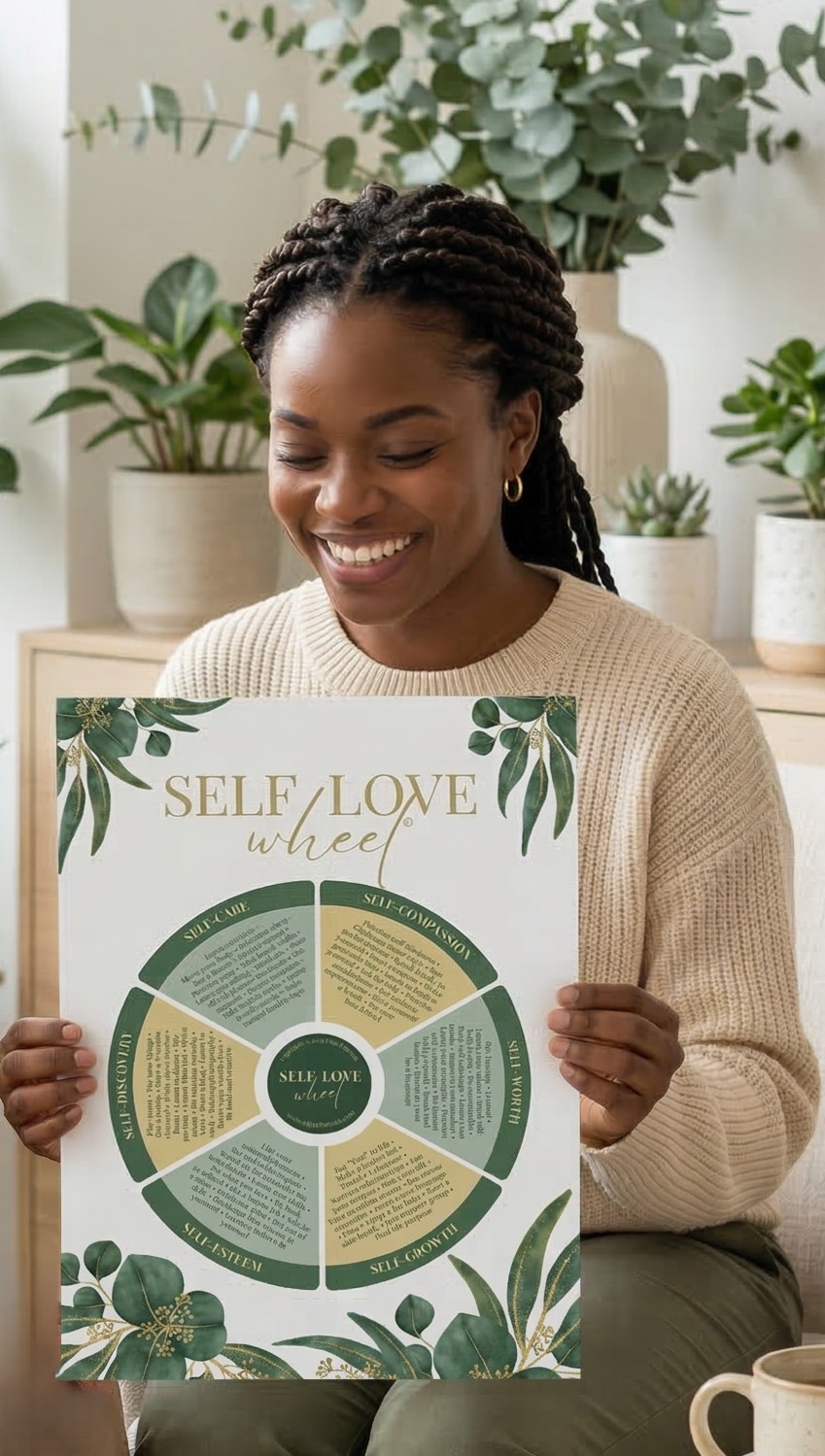
The Self-Love Wheel© was created to give this terrain language. To make visible the difference between:
being caring and disappearing
accountability and self-cruelty
humility and shame
love and the desperate attempt to earn it
It emerged from Olga’s long-standing work in self-worth, healing, personal transformation, and the deeply personal truth that a life can look functional while a person remains estranged from herself.
The Wheel offers a gentler, clearer way to begin returning.
For Helping Professionals
Bring deeper, more grounded self-love work into your sessions, groups, and programs.
If you are a therapist, counselor, coach, advocate, social worker, educator, or program leader, you have likely witnessed the pain this framework speaks to.
The client who cannot receive a compliment.
The survivor who blames herself for what was done to her.
The high-achiever who sees every human limitation as proof of failure.
The caregiver who believes her needs matter only after everyone else has been served.
The person who says “I know I should love myself” - but has no idea what that actually means in practice.
The Self-Love Wheel© gives professionals a more meaningful path into these conversations - moving beyond vague encouragement and into structured, compassionate exploration of self-worth, self-compassion, shame recovery, boundaries, self-trust, receiving care, self-expression, and patterns of self-abandonment.
That is why Olga created:
The Self-Love Wheel© Copyright Licensing Suite
Professional licensing + emotionally intelligent tools to help you use the Self-Love Wheel© in client sessions, groups, workshops, and healing programs with greater clarity, confidence, and impact.
Why This Framework Is Different
Because self-love deserves more than surface-level positivity.
The Self-Love Wheel© does not reduce healing to inspirational slogans or demand that people instantly feel radiant, confident, and empowered while deeper wounds remain unnamed. It creates space for the real work:
seeing where self-erasure became a survival strategy
noticing where shame still governs choices
understanding why receiving care can feel unsafe
naming the cost of living as though one’s needs are negotiable
beginning to imagine a relationship with self rooted in dignity rather than punishment
It is compassionate.
It is structured.
It is emotionally honest.
What changes when I stop treating myself like someone outside the circle of my own care?